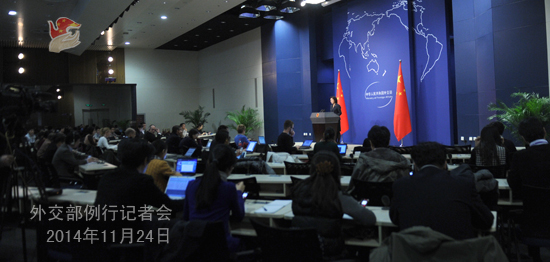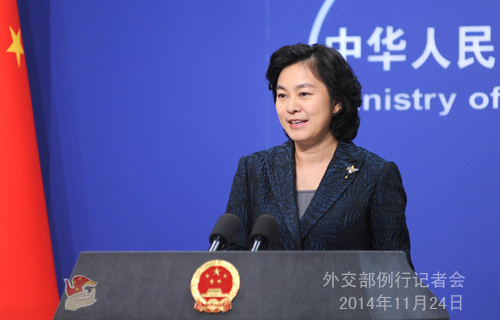
Q: Yesterday, the Zangmu hydropower dam built by China on the Yarlung Zangbo river was put into operation. China also plans to build at least three other dams there. Will China take into account the concerns of downstream countries such as India and Bangladesh? Can you share with us information on the discussions that China has been having with India following the signing of the MoU on Strengthening Cooperation on Trans-border Rivers?
A: The Chinese side is always responsible in developing and utilizing trans-border rivers. We lay equal emphasis on development and protection, and take into full consideration the influence on downstream areas. Dams being planned will not affect flood prevention and ecology of downstream areas.
The Chinese side and the Indian side have been in communication and cooperation on the issue of trans-border rivers. For quite some time, the Chinese side, bearing in mind the big picture of China-India amity and the spirit of humanitarianism, has done a lot in providing the Indian side with the hydrological data of relevant river in the flood season and dealing with emergencies, playing an important role for flood prevention and disaster reduction in downstream areas. Practice has proved that the cooperation between China and India in sharing hydrological data, forecasting floods and handling emergencies is effective, and the line of communication is open. Since the signing of the MoU between China and India on Strengthening Cooperation on Trans-border Rivers in 2013, the two sides have been in sound communication through the mechanism of expert-level meetings. In the joint statement released by the two sides during President Xi Jinping's visit to India last September, the Indian side expressed gratitude to China for its provision of hydrological data and assistance in handling emergencies, saying that the two sides will continue with their cooperation in sharing hydrological data, forecasting floods and handling emergencies concerning trans-border rivers through the mechanism of expert-level meetings.
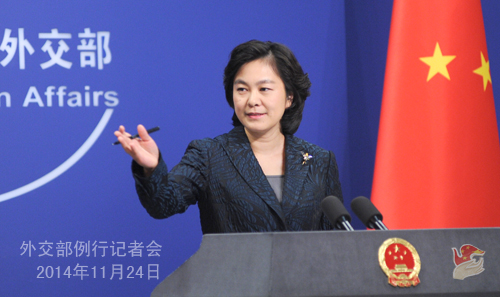
Q: Yesterday, the National Defence Commission of the DPRK issued a fresh threat of nuclear war to the Korean Peninsula in response to the UN resolution condemning its human rights records. What is China's comment on that?
A: It is the long-standing position of the Chinese side that all countries should address differences in the field of human rights through constructive dialogue and cooperation.
The stance upheld by the Chinese side is clear and firm when it comes to the Korean nuclear issue, that is, we should stay committed to realizing denuclearization of the Korean Peninsula, safeguarding peace and stability of the Peninsula and peacefully resolving the issue through dialogue and consultation. All parties concerned should work with joint efforts to reduce the tension through dialogue and contact and create conditions for an early resumption of the Six-Party Talks.
Q: Does the Chinese side believe that it is possible for the negotiation on the Iranian nuclear issue to come to a comprehensive agreement by the deadline?
A: Foreign Minister Wang Yi has left for Vienna, Austria this early morning to attend the negotiation on a comprehensive agreement on the Iranian nuclear issue. As we talk, negotiating teams of the P5+1 and Iran are busily engaged with the negotiation on a comprehensive agreement on the Iranian nuclear issue. We hope that all parties could seize the current historic opportunities, demonstrate their political will, and make political decisions. The Chinese side, who is exploring better ways to advance the negotiation in light of the current situation, has been playing a constructive role in its own way in the course of negotiations. The Chinese side hopes that the P5+1 and Iran will reach a comprehensive agreement that benefits all at an early date.