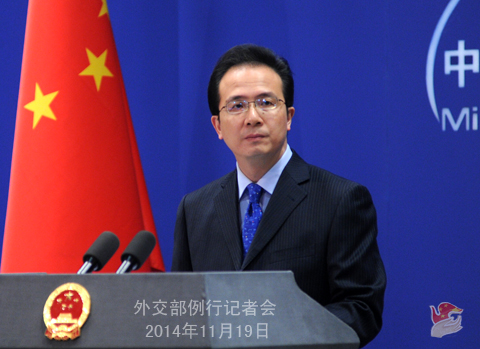
Q: On November 18, a new round of negotiations between Iran and P5+1 on the Iranian nuclear issue began in Vienna. What position does China hold in these negotiations? Where are these negotiations going in the eyes of China? Is it possible to reach a deal before the deadline of November 24?
A: At present, P5+1 and Iran are stepping up negotiations on a comprehensive agreement to address the Iranian nuclear issue in Vienna.We believe that what is paramount in the course of negotiations is for all parties to stick to the consensus, focus on and narrow down differences, and seek a package solution to the focal issues of a comprehensive agreement "within the reasonable timeframe agreed on by all parties" on the basis of step-by-step and reciprocal principle. The differences that emerge from the current stage of negotiations are fundamentally political. All parties should seize the historic opportunity, show their political will and make political decisions. Together with other parties, China will continue to contribute to the negotiations constructively, and make positive efforts to ensure that a comprehensive agreement that is mutually beneficial and win-win to all can be reached as scheduled.
Q: On November 18, the Third Committee of the UN General Assembly passed a resolution on the human rights issue in the DPRK. What is China's stance on this?
A: It is China's long-standing position that all countries should address differences concerning human rights through constructive dialogue and cooperation, and human rights issues shall not be politicized or be used to pressurize other countries. We are of the view that the UN Security Council is not the right place to discuss human rights issues, and the referral of human rights issues to the International Criminal Court is not conducive to their resolution. Therefore, China voted against the resolution of the Third Committee of the UN General Assembly on the DPRK's human rights issue.