At the invitation of Executive Chairman of the World Economic Forum Klaus Schwab and the Swiss Confederation government, Premier Li Keqiang of the State Council will attend the World Economic Forum Annual Meeting 2015 in Davos, Switzerland and pay a working visit to Switzerland from January 20 to 22.
While attending the World Economic Forum Annual Meeting, Premier Li Keqiang will attend the plenary session of the Forum and deliver a special speech. Premier Li will also have dialogue and discussions with representatives of the International Business Council of the Forum and meet with Executive Chairman Schwab. Premier Li will elaborate on the international landscape and China's economic performance, and provide information on measures taken by China to comprehensively deepen reform.
While paying a working visit to Switzerland, Premier Li Keqiang will hold working talks with Simonetta Sommaruga, President of the Swiss Confederation. It is our hope that this visit will kick off events commemorating the 65th anniversary of the establishment of diplomatic relations between China and Switzerland.
At the invitation of the government of Mozambique, Minister of Justice Wu Aiying, as the special envoy of President Xi Jinping, will attend the inauguration ceremony of President-elect Filipe Nyusi on January 15 in Mozambique.
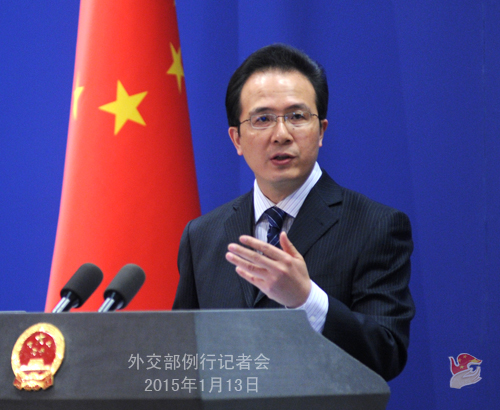
On January 12 local time, Foreign Minister Wang Yi attended the Special Consultation in Support of the IGAD-led South Sudan Peace Process in Khartoum, the capital of Sudan, delivering a key-note speech and putting forward China's initiatives on advancing South Sudan peace process.
Foreign Minister Wang Yi said that as a friendly country to South Sudan and a major responsible country, China has been following South Sudan situation closely and proactively prompting the peace process. China is a promoter, advocate and participant of the peace process in South Sudan. The South Sudan situation has come to a critical point, and all parties should step up the sense of urgency, put more weight on the overall interests, take concrete actions and properly resolve the South Sudan issue as soon as possible. China is willing to play a proactive and constructive role to this end.
Wang Yi put forward four initiatives on resolving the South Sudan conflict. First, violence should be discarded and comprehensive ceasefire should be realized. The conflicting parties should safeguard the realistic and long-term interests of the South Sudan people as well as regional peace and stability, and reach comprehensive ceasefire without any precondition. Second, a transitional government should be formed as soon as possible. Both parties should build on the existing negotiation outcomes, seize the opportunity, show sincerity and accelerate negotiations on forming a South Sudan transitional government following the principles of starting with easy things and seeking common ground while shelving differences. Third, the major mediator role played by IGAD should be firmly supported. Meanwhile, the international community should continue to support and coordinate with IGAD in mediating and supervising the ceasefire. Fourth, the humanitarian situation in South Sudan should be alleviated as soon as possible. The conflicting parties should make down-to-earth efforts to ease the grave humanitarian situation in conflicting zones and provide conveniences for international humanitarian access. The international community should provide more assistance to effectively relieve the misery of the South Sudan people. Foreign Minister Wang Yi hoped that the conflicting parties can genuinely safeguard the safety of foreign personnel and institutions in South Sudan, and protect important infrastructure that bears on the national interests and people's livelihood of South Sudan so as to create necessary conditions for future economic reconstruction and development in South Sudan.
All the attending parties have expressed gratitude and welcome to China for proposing to hold this special consultation and putting forward relevant initiatives. They believe that what China has done will contribute to South Sudan peace process, and that by making efforts to push forward South Sudan peace, China is supporting peace and security of Africa. Given the current circumstances, China's initiatives and efforts are timely and more than precious. All parties attach great importance to this consultation and are willing to work with the Chinese side to push for progress in South Sudan peace process.
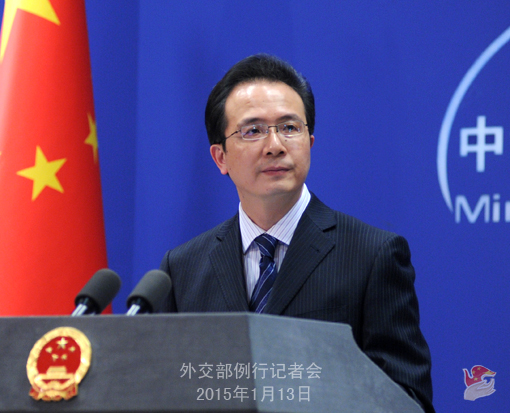
On January 12, three Ebola patients were discharged from the Ebola treatment center built by China for Liberia after making a full recovery from the disease, and a seeing-off ceremony was held for them by the center.
They are two females and one 7-year-old boy. After being admitted to the center last December with their blood samples tested positive, the three patients were once in a critical condition. With the hard work and good care of the medical team for nearly 20 days, the three patients received negative results in blood tests for two consecutive times and were confirmed as cured based on World Health Organization regulations. This represents that China has made great achievements in assisting Liberia in combating Ebola at the current state.
Assistant Minister of Public Health of Liberia Tolbert Nyenswah said that China's medical center have admitted numbers of Ebola-infected patients in a short span of time, some of whom have recovered and left the center. Liberian President Sirleaf asked him to convey her sincere thanks to the medical staff in the center for their conscientious work. The Liberian people are also grateful to China's treatment center.
Among those recovered is Celestine King, who is a table-tennis player of the Liberian national team. She is not only a national champion of table-tennis, but also a winner in combating Ebola. She said that in the medical center, she had received meticulous treatment and care from the Chinese medical staff and then recovered soon. She is deeply grateful to the Chinese medical staff and the medical center for giving her a second life.
China is also inspired by the recovery of Ebola patients in the treatment center. China is willing to work with the international community to contribute more to help relevant countries and people in Africa fight against Ebola.
Q: Yesterday, China and Japan held talks on maritime crisis management mechanism. Please update us on the outcomes of the talks and the work plan in the next step.
A: The Chinese Ministry of National Defense has released information about the talks. Defense Ministries of China and Japan held the fourth round of expert-level talks in Tokyo on maritime crisis management mechanism on January 12. The two sides reaffirmed agreements they have made so far on the establishment of the mechanism, discussed and found some common ground on specifics and technical issues concerning the mechanism. Both countries agreed to launch the mechanism as soon as possible after some necessary adjustments based on this round of talks.
Q: First, recently terrorist attacks hit Nigeria. Will China send military force to help the Nigerian government fight against terrorism? Second, the Afghan government and Taliban are likely to hold meetings in China this year. Can you give us more details? Does China's involvement in Afghan peace and reconciliation process include arranging meetings for the Afghan government and Taliban?
A: On your first question, China is against all forms of terrorism and supports Nigeria's efforts in safeguarding national security and stability.
I have answered questions similar to your second one recently. As a friendly neighbor of Afghanistan, China pays great attention to the situation in Afghanistan and hopes for long-lasting peace, stability and development in Afghanistan at an early date. China supports the "Afghan-led and Afghan-owned" peace and reconciliation process and stands ready to work proactively and constructively to this end.
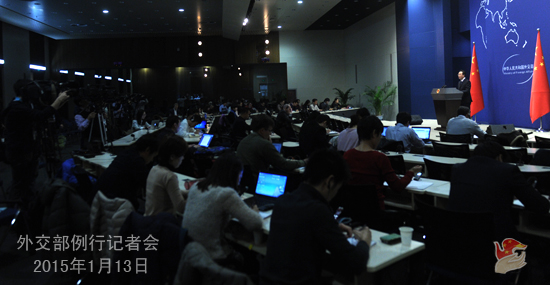
Q: What effects will the maritime crisis management mechanism talks between China and Japan bring to the settlement of the Diaoyu Islands dispute? Will China continue with its patrol in waters off the Diaoyu Islands? Has any understanding on the exchange of cruise information been reached in the talks?
A: China's position on the Diaoyu Islands is clear-cut. We urge the Japanese side to face up to history, respect facts and exert itself to properly manage and resolve the Diaoyu Islands issue through bilateral dialogue and consultation.